IZAR
Tuesday, February 3, 2009

HIJABS & UNDERCAPS


 www.hijabnow.com/webshop/
The hijab underscarf cap helps scarves and shawls stay in place plus adds a lovely accent with the ever popular layered look and keeps the hair off the face.The under cap is made in a tube like shape and are simply pulled over the head after which the hijab is wrapped around it.Made of 100% polyester.
Available Options:INSURGANT GROUPS
The Iraqi insurgency is composed of at least a dozen major organizations and perhaps as many as 40 distinct groups. These groups are subdivided into countless smaller cells.
main groupings are:
- Ba'athists, the supporters of Saddam Hussein's former regime including army or intelligence officers, whose ideology is a variant of Pan-Arabism.
- Nationalists, Iraqis who believe in a strong version of Iraqi self-determination. These policies may not necessarily espouse a Pan-Arab ideology, but rather advocate the country's territorial integrity including Kuwait and Khusestan. Historical figures of this movement include the pre-Ba'athist leader of Iraq Abd al-Karim Qasim and his government.
- Iraqi Salafis Islamists, the indigenous armed followers of the Salafi movement, as well as any remnants of the Kurdish Ansar al-Islam: individuals with a Salafi-only policy opposed to non-Salafis though not aligned to one specific ethnic group. Though opposed to the US-led invasion, these groups are not wholly sympathetic towards the former Ba'ath Party as its members included non-Salafis. It is important to remember that the terms Salafi and Wahabi are often used synomously and indeed they are both typically from foreign nations (usually Saudi Arabia).
- Shi'a militias, including the southern, Iran-linked Badr Organization, the Mahdi Army, and the central-Iraq followers of Muqtada al-Sadr. These groups have Shia religious theories and as such, neither advocate the dominance of a single ethnic group, nor the traditional ideologies behind the Iraqi state (eg. these particular Shi'ites do not support the capture of Khustestan or other border areas with Iran, but rather promote warm relations with Iran's Shi'ite government).
- Foreign Islamist volunteers, including those often linked to al Qaeda and largely driven by the Salafi/Wahhabi doctrine (the two preceding categories are often lumped as "Jihadists");
- At least one socialist revolutionaries (such as the Iraqi Armed Revolutionary Resistance).
- Non-violent resistance groups and political parties (not part of the armed insurgency).
--------------------------------------
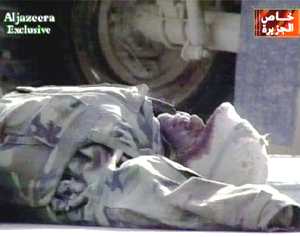
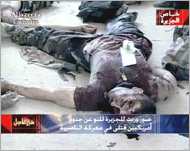
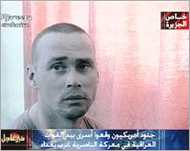
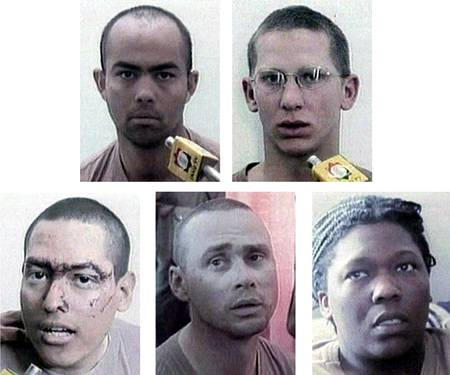
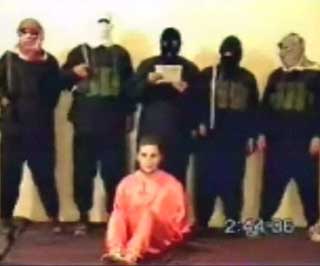
Keith Matthew "Matt" Maupin (born July 13 1983, died c. 2004) was a United States Army Private First Class (PFC) captured by Iraqi insurgents on April 9 2004, while serving in the Iraq War, after his convoy came under attack by rocket-propelled grenades and small arms fire near Baghdad, Iraq.
Iraqi militants killed an American soldier they have held hostage for nearly three months, saying the killing was because the U.S. government did not change its policy in Iraq, Al-Jazeera television said Tuesday.

The grainy videotape of a frightened-looking 20-year-old US soldier, wearing camouflage shirt and a floppy hat, is the latest move by extremist Iraqis to pull at the heartstrings of the American people.
"My name is Keith Matthew Maupin. I am a soldier from the 1st Division," the hostage said into the camera. "I am married with a 10-month-old child. I came to liberate Iraq, but I did not come willingly because I wanted to stay with my child."
The gunmen, their faces covered by kaffiyehs( ...)He said the soldier was being treated well, in accordance with Islamic law.
 ---------------------------------------------------------------------------
Troops hunt near Baghdad for captive US soldiers
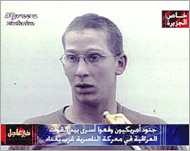
AL-AWSAT, Iraq (AFP) — US and Iraqi troops swooped by helicopter before dawn on Friday on two Sunni Arab villages near Baghdad in search of Al-Qaeda fighters believed to have captured two American soldiers.
The operation, targeting the small farming villages of Al-Awsat and Al-Batra, just 25 kilometres (15 miles) southwest of the capital--------------------------
Thursday, January 29, 2009


Wednesday, January 28, 2009
clothing
The traditional dress of Iraq is a reflection of Iraqi technical skills, aesthetic and political ideals, moral standards, and religious values. Members of Iraqi society are deeply immersed in Islamic fundamentalism; consequently, costume reflects these ideals and values. Traditional dress is less prevalent in urban centers such as Baghdad and Basra than in rural areas. All social classes wear the same clothing, with only subtle differences. Arabs and Kurds exhibit distinct differences in their clothing, though both are predominantly Muslim.
The traditional dress of Arab Iraqi men includes the dishdasha, an ankle-length, typically white, loose-fitting, shirtlike garment allowing free air circulation over the body; the aba, a long cloak, tan or neutral in color, for cool weather; the kaffiyeh, a white or checked square scarf folded into a triangle and sometimes worn over a small white cap with the agal, a circular black rope or plaited-cord device to hold the kaffiyeh in place; and sandals. Men also wear undershirts anddrawers, loose trousers, and a cotton or wool coat. The dishdasha may be hoisted up and secured for greater freedom of movement, and the aba may be doubled up over the head. To further protect against the elements, the ends of the headdress may be wrapped loosely around the neck, across the ears and lower face, or around the top of the head.
The Arab Iraqi woman's traditional costume is designed to conceal the woman and achieves this through hijab, or veiling, the practice of covering the woman's hair and body for the sake of modesty and adherence to socioreligious requirements. Veiling is believed to prevent men from falling into temptation and to protect women from unwanted sexual advances. The traditional costume includes the abayah, a long black cloak worn over a dress and covering the wearer from head to foot; the asha, a black head scarf; the foota, a black chin scarf; sandals or clogs; and gold or silver jewelry (for example, ankle bracelets, earrings, or pendants, valued not only as ornament but as insurance in case a woman's husband dies, leaves, or divorces her). The dress under the abayah is traditionally a black long-sleeved, ankle-length shift or yoke-style, but may be other colors. Younger women may wear the abayah and veil only when they leave the house but indoors wear dresses of printed cotton (during the summer) and flannelette (during the winter). In winter women may wear four or five layers of clothing—heavy black sweaters and black imitation caracul jackets—under the abayah. The hashmiya is a wide-sleeved full net or sheer black ceremonial gown that women wear for certain religious ceremonies.
The traditional costume of Kurdish men includes baggy pantaloons, a shirt, a cummerbund (in which valuables are kept, as well as a dagger or two), peaked leather slippers, a close-fitting cap or turbanlike head wrap, and, in winter, a quilted jacket and long cloak in bright colors. Kurdish women have never practiced veiling and enjoy considerable latitude in community activities. The traditional costume is modest but colorful, and it includes a loose-fitting dress or kirtle, a short collarless jacket, a headscarf or turban, and several pieces of jewelry. At times they wear a bifurcated garment similar to Turkish trousers.
An Islamic man may have up to four wives, and a large family is highly desirable, since the greater the number of children, especially sons, the greater the prestige of the father. Young girls are dressed in brightly colored print dresses, and boys are clothed in candy-striped dishdashas, or trousers. Typical footwear is sandals or tennis shoes. Children often wear sweaters, wool scarves, and caps in winter. Boys and girls are traditionally separated at puberty, and girls are excluded from male society outside the family circle. Parents generally arrange marriages, preferably between relatives, and part of preparation for the ceremony includes decorative painting of the bride's hands and feet with henna, a natural red dye.
Westernization of traditional costume is prevalent throughout Iraq, and increasing educational levels and opportunities in the workforce encourage the abandoning of all or parts of traditional dress. Wealthy professionals in urban centers have adopted Western dress to a greater extent than other components of the population. Most men who have visited the city own at least one Western-style business suit, and women may wear highly fashionable Western dresses or suits with or without the abayah. Many women who discarded traditional dress after the revolution, however, have reverted to traditional dress as an expression of national pride.

 An armed boy belonging to the anti-Qaeda Sahwa group watches people grieving over the bodies of relatives killed in a suicide bomb attack in the Sunni Arab village of Bu Mohammed in the restive Diyala province north of Baghdad on April 17, 2008. A suicide bomber blew himself up in a crowd of mourners in Bu Mohammed, killing at least 51 people in one of the biggest insurgent attacks in violence-wracked Iraq this year.


 ARAB JABAR, IRAQ - FEBRUARY 27: A man is hooded and detainded by the Iraqi Army for questioning after securing a village thought to be a haven for insurgents February 27, 2008 in Diyala Province, Arab Jabar, Iraq. Diyala Province was until recently the geographical headquarters of al Qaeda in Iraq, where they terrorized citizens and used the strategically located city as a base for operations. With the surge in U.S. troops coupled with the nascent anti-al Qaeda Sunni groups, security in Diyala has improved.
 7: A man is blindfolded and detainded by the Iraqi Army for questioning after securing a village thought to be a haven for insurgents February 27, 2008 in Diyala Province, Arab Jabar, Iraq. Diyala Province was until recently the geographical headquarters of al Qaeda in Iraq, where they terrorized citizens and used the strategically located city as a base for operations. With the surge in U.S. troops coupled with the nascent anti-al Quaeda Sunni groups, security in Diyala has improved.
 A U.S. soldier guards two blindfolded detainees in Khashwaga's village 45 km south west of Kirkuk in northern Iraq, on Thursday, June 5, 2008. Join U.S. army and Iraqi police raided Khashwaga's village early Thursday and arrested 3 members of Ansar al-Sanna, the U.S. army said.
 A U.S. Army soldier from Hammer Company, Third Squadron, Second Stryker Cavalry Regiment is eyed by an Iraqi teen during a visit to the boy's home in the Shiite village of Sebta, about 90 kilometers (60 miles) north of Baghdad in Iraq's volatile Diyala province on Friday, July 18, 2008.
women
 Iraqi women carry water buckets in a village near the Shiite holy city of Najaf, 160 kilometers (100 miles) south of Baghdad, Iraq, Sunday, April 13, 2008. Hassan al-Jabani, a senior adviser in Iraqi ministry of water resources said Iraq will suffer a large shortage of water over the next three years.
  A woman washes clothes as an Iraqi soldier patrols in a village near the city of Najaf, 160 kilometers (100 miles) south of Baghdad, Iraq, on Thursday, May, 29, 2008. Iraqi army said that they arrested 5 foreigners during the patro
 omen attend a literacy class in a village on the outskirts of Najaf, 160 kilometers (100 miles) south of Baghdad, Iraq, Tuesday, July 15, 2008. According to some estimates, up to thirty percent of adults in Iraq are illiterate.
 A woman attends a literacy class in a village on the outskirts of Najaf, 160 kilometers (100 miles) south of Baghdad, Iraq, Tuesday, July 15, 2008. According to some estimates, up to thirty percent of adults in Iraq are illiterate.
 An Iraqi girl eyes a U.S. Army soldier from Hawk Company, 3rd Squadron, 2nd Stryker Cavalry Regiment, as they visit her family's home during a patrol in a village near Muqdadiyah, about 90 kilometers (60 miles) north of Baghdad in Iraq's volatile Diyala province Saturday, Aug. 2, 2008.
basement
 A man watches as members of the 2nd Battalion, 6th Brigade, 2nd Division Iraqi National Police search his home in the village of Harbatiliyah, in Iraq's Diyala province, some 80 kilometers (50 miles) northeast of Baghdad, Thursday, Aug. 21, 2008. The Iraqi government is touting significant improvements in the performance of its forces as it pushes for a timeframe for American withdrawal as part of negotiations over a long term security agreement. But experts warn the Iraqis are still heavily reliant on their American counterparts for everything from explosives expertise to air support and exaggerating their progress isn't helping them.
 A man watches as a member of the 2nd Battalion, 6th Brigade, 2nd Division Iraqi National Police searches his home in the village of Harbatiliyah, in Iraq's Diyala province, some 80 kilometers (50 miles) northeast of Baghdad, Thursday, Aug. 21, 2008. The Iraqi government is touting significant improvements in the performance of its forces as it pushes for a timeframe for American withdrawal as part of negotiations over a long term security agreement. But experts warn the Iraqis are still heavily reliant on their American counterparts for everything from explosives expertise to air support and exaggerating their progress isn't helping them.
 A member of the 2nd Battalion, 6th Brigade, 2nd Division Iraqi National Police pauses as his squad searches a house in the village of Harbatiliyah, in Iraq's Diyala province, some 80 kilometers (50 miles) northeast of Baghdad, Thursday, Aug. 21, 2008. The Iraqi government is touting significant improvements in the performance of its forces as it pushes for a timeframe for American withdrawal as part of negotiations over a long term security agreement. But experts warn the Iraqis are still heavily reliant on their American counterparts for everything from explosives expertise to air support and exaggerating their progress isn't helping them.
 A member of the 2nd Battalion, 6th Brigade, 2nd Division Iraqi National Police searches a house in the village of Harbatiliyah, in Iraq's Diyala province, some 80 kilometers (50 miles) northeast of Baghdad, Thursday, Aug. 21, 2008. The Iraqi government is touting significant improvements in the performance of its forces as it pushes for a timeframe for American withdrawal as part of negotiations over a long term security agreement. But experts warn the Iraqis are still heavily reliant on their American counterparts for everything from explosives expertise to air support and exaggerating their progress isn't helping them.
 A member of the 2nd Battalion, 6th Brigade, 2nd Division Iraqi National Police searches a house in the village of Harbatiliyah, in Iraq's Diyala province, some 80 kilometers (50 miles) northeast of Baghdad, Thursday, Aug. 21, 2008. The Iraqi government is touting significant improvements in the performance of its forces as it pushes for a timeframe for American withdrawal as part of negotiations over a long term security agreement. But experts warn the Iraqis are still heavily reliant on their American counterparts for everything from explosives expertise to air support and exaggerating their progress isn't helping them.
 raqis dig graves to bury the victims of a suicide bomb attack in the Sunni Arab village of Bu Mohammed in the restive Diyala province north of Baghdad on April 17, 2008. A suicide bomber blew himself up in a crowd of mourners in Bu Mohammed, killing at least 51 people in one of the biggest insurgent attacks in violence-wracked Iraq this year.

 A relative mourns over the body of an Awakening Council member at a hospital in Baqouba, who was killed when gunmen attacked a checkpoint in a village outside Baqouba, Iraq, Saturday, Dec. 6, 2008. Three council members were killed and four were wounded in the attack. Awakening Councils are made of former Sunni militants who turned against al-Qaida and sided with the Americans.
 US soldiers from 2nd Battalion 23rd Infantry Regiment, speak with an Iraqi farmer during a patrol in the restive Diyala province, northeast of Baghdad on March 9, 2008. Four people were killed and several others wounded in separate attacks in Iraq today, Iraqi security officials said
 a member of the self proclaimed 'Army of National Liberation' poses with his comrades at a street in Baghdad's central Fadel area, 18 December 2007
 An Iraqi youth grieves as he sits next to the bodies of people killed in a home targeted on September 19 2008 in a pre-dawn strike by the US air force in the northern Iraqi village of al-Dawr, near the city of Tikrit some 180 kms from Baghdad. The air strike killed eight family members, three of them women
 Abula, village mayor, inspects a new canal
 Iraqi farmers stand outside a rural school while it's inspected by a U.S. Army Civil Affairs team for possible reconstruction funds (near Baghdad, April 2005).
 militant youth in Iraq's northern mountains.
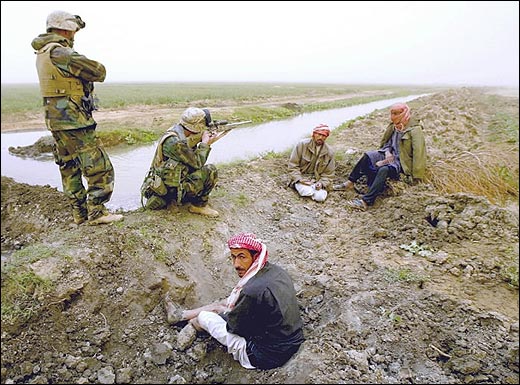 raqi farmers look on as US Marines from the 3rd Batallion, 4th Regiment patrol the main road used by coalition forces on their way to Baghdad.
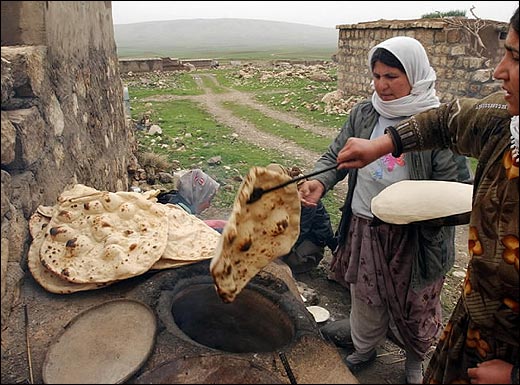 Kurdish women from the village of Sina make fresh bread in Kurdish-ruled northern Iraq
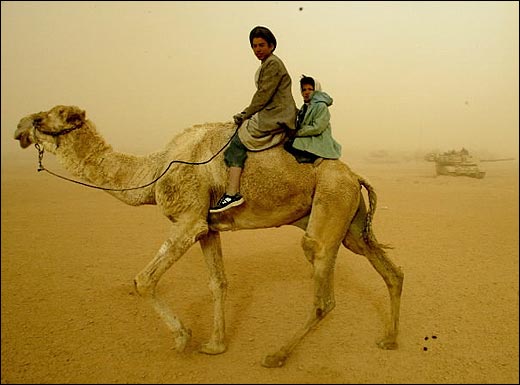 Two Iraqi children ride a camel during a sandstorm south of KarbalaTwo Iraqi children ride a camel during a sandstorm south of Karbala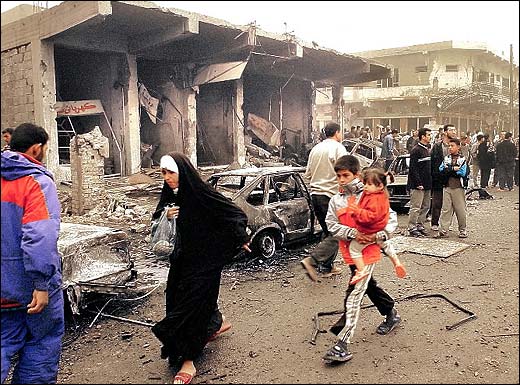


Subscribe to:
Comments (Atom)

